Starting with the VCT 2027 season, Riot Games is officially pivoting to a tournament-based ecosystem designed to ensure every single match carries monumental stakes for players and fans alike.
This evolution moves away from traditional league play, instead favoring a “Tournament-First” model that emphasizes open qualification, expanded global reach, and a refreshed partnership structure.
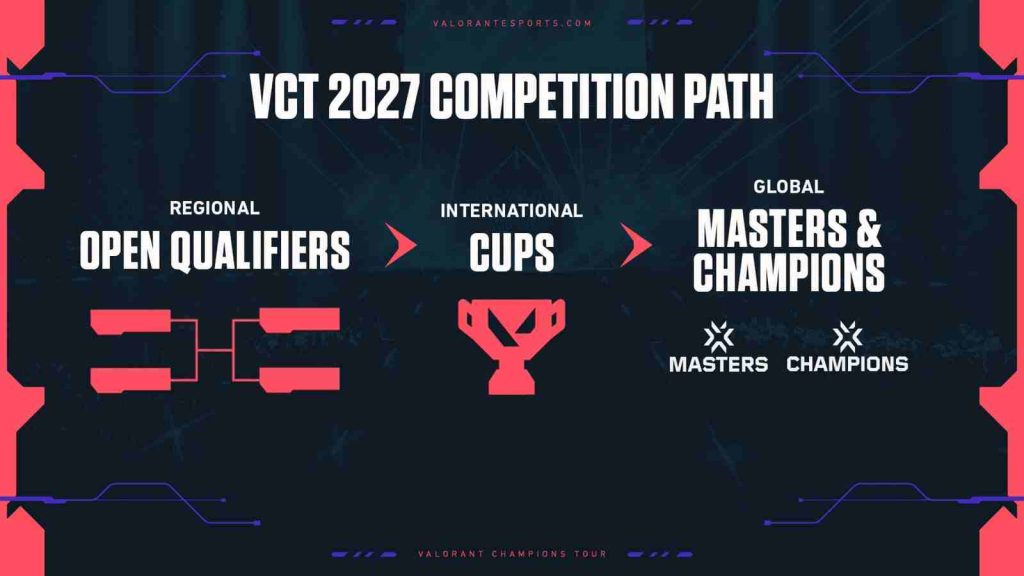
The core of the VCT 2027 update is the removal of barriers for rising talent. For the first time in Valorant history, any aspiring team can reach the most prestigious stages in the sport—Masters and Champions—through a direct path of open qualifiers.
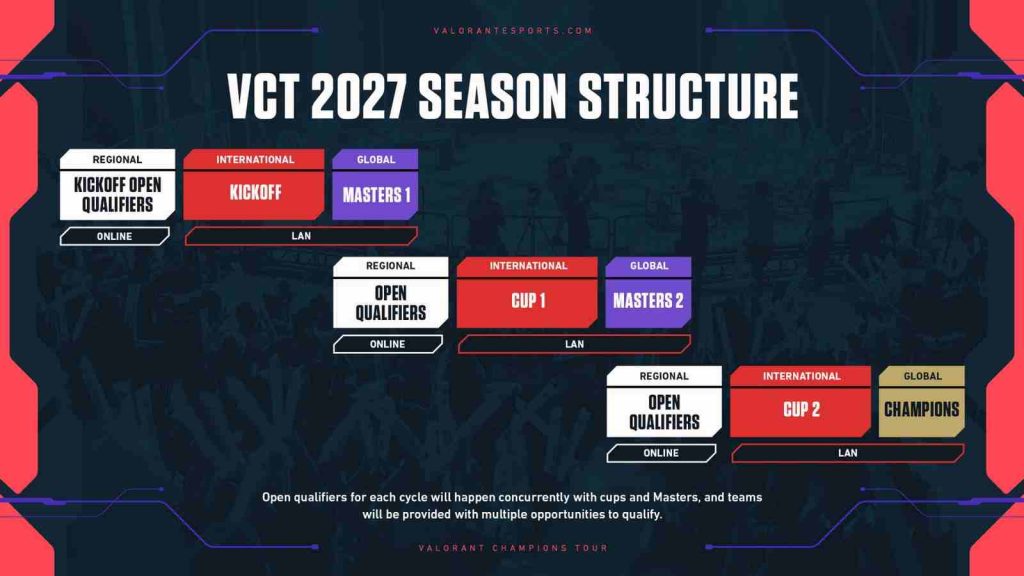
These qualifiers feed into regional tournaments that will travel to more locations than ever before, providing a high-speed progression for teams that perform under pressure.
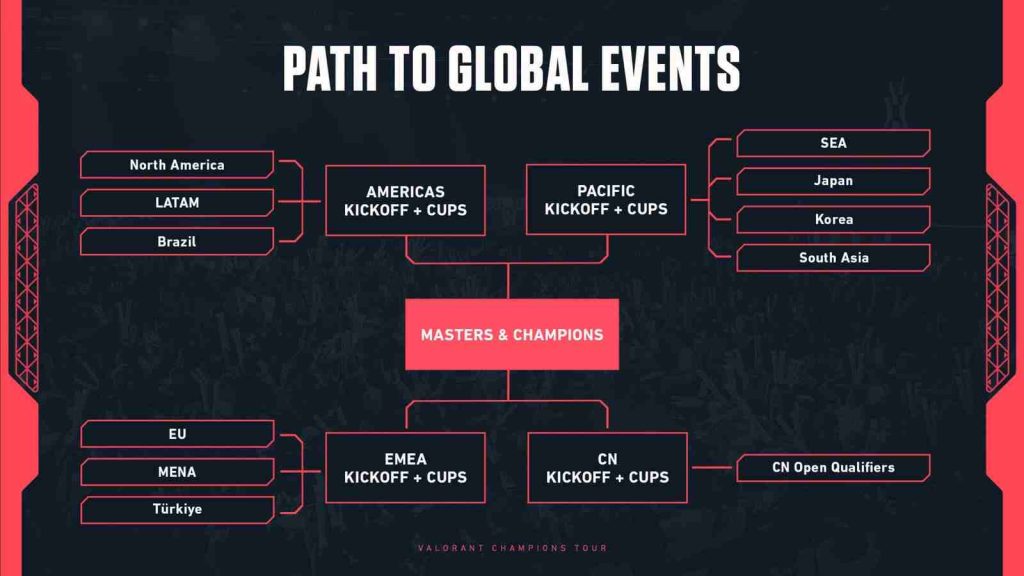
Replacing the previous international league formats, VCT Cups will serve as the primary competitive vehicle. These LAN-based tournaments will determine the elite teams in each region.
Open Pathways: Integrated qualifiers ensure new challengers can rise at any time.
Live Finals: Events will conclude with high-energy finals held in different cities across each region.
Global Seeding: Performance in these Cups serves as the primary gateway to international Masters and Champions events.
Expanded global footprint and financial stakes
Credit: Riot Games
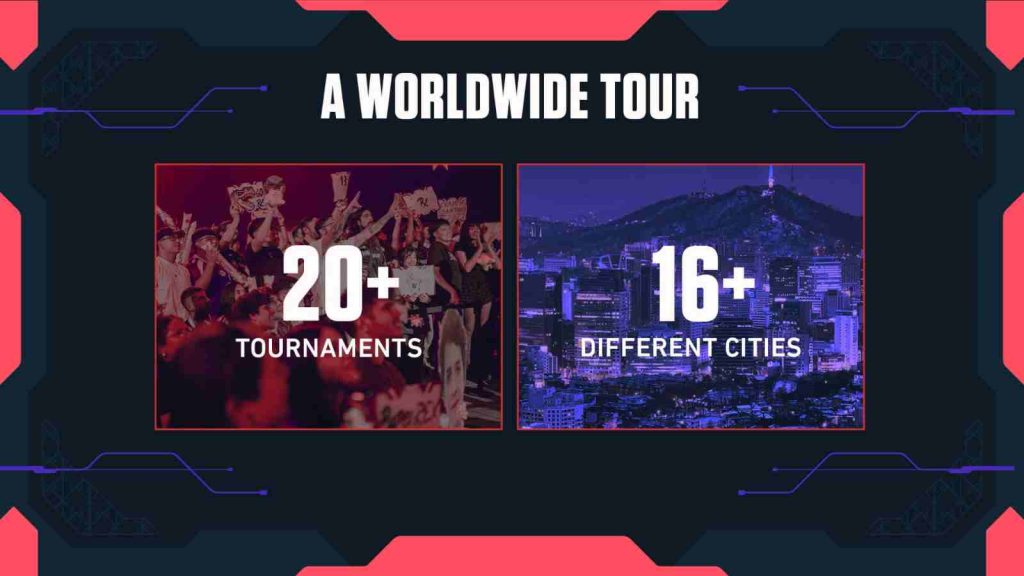
Riot Games is significantly scaling the physical presence of Valorant esports. The tour will now include over 20 tournaments annually, visiting more than 16 different cities across the globe.
This roadshow format brings the action directly to local fanbases in various territories. The financial ecosystem is also receiving a massive boost:
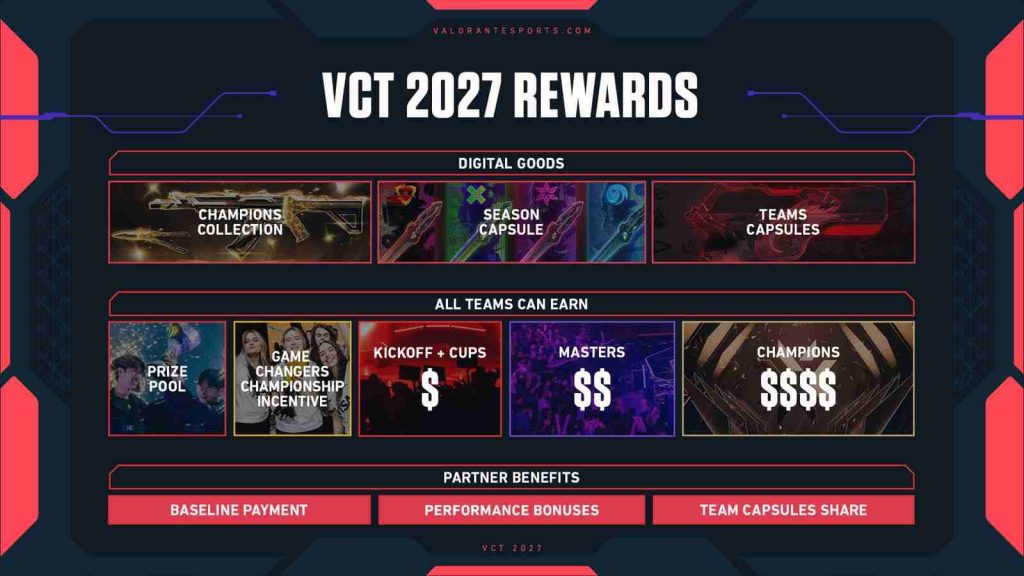
Prize Pools: Over $6 million USD will be awarded annually across the circuit.
Digital Goods: Building on the success of 2025—where Riot shared over $86 million with teams—digital revenue remains a cornerstone of team sustainability.
Travel Support: Riot will provide fully funded travel for teams qualifying for global events, ensuring that financial constraints do not hinder competitive excellence.
VCT 2027 introduces new two-year partnership model
Credit: Riot Games
A refreshed partnership system begins in 2027, moving to a two-year cycle with updated criteria to ensure the most dedicated organizations remain at the forefront.
While open qualifiers allow anyone to win, Partner Teams receive specific advantages to maintain ecosystem stability:
Base Payments and Performance Bonuses: Guaranteed annual funding supplemented by rewards for meeting community and competitive goals.
Direct Seeding: Partner teams enter qualifiers at later stages, providing them with more consistent exposure and protection.
Team Capsules: Continued integration of in-game skins, allowing fans to support their favorite orgs directly.
Riot will evaluate partner applications based on community resonance, business sustainability, operational excellence, and a proven commitment to growing the Valorant community.
A unified path to glory
Credit: Riot Games
Under the VCT 2027 structure, all teams will eventually compete within a unified system and a single tier of competition. This “open-door” policy allows teams to build momentum throughout the year, making repeated runs at global events and adapting between competitive cycles.
Non-partnered teams will see more support than ever, including cash incentives tied to qualification milestones and faster payout cycles to help sustain their operations.
In this high-stakes environment, a top-performing non-partner team has the potential to outearn a lower-ranked partner team based purely on merit.
“VCT 2027 is about reimagining how teams compete and how fans experience Valorant esports,” says Leo Faria, Global Head of Valorant Esports.
Credit: Riot Games
“By shifting to a tournament-driven system with open access to our biggest events, we’re creating a more dynamic, high-stakes ecosystem where every match matters and every team has a shot at the global stage.”
More details regarding specific regional formats and the full list of host cities will be released in the months leading up to Champions.
What VCT 2027 means for the future of Valorant esports
Overall, this shift to VCT 2027 marks yet another pivotal chapter in what has been a rapidly evolving history for Valorant’s competitive landscape.
Credit: Riot Games
Valorant released in June 2020. A year later, the VCT tour debuted in 2021 with an “Open Era” featuring a three-tiered structure of Challengers, Masters, and Champions, allowing over teams to participate in a sprawling regional system.
By 2023, Riot pivoted sharply toward a “Franchised Era,” consolidating competition into four international leagues (Americas, EMEA, Pacific, and later China) with a fixed set of partner teams.
While this provided much-needed stability and massive revenue sharing, it also created a “hard wall” between the elite and aspiring talent.
This new 2027 overhaul effectively bridges those two worlds, dismantling the closed-league system in favor of a hybrid model that restores the open path spirit of 2021 while maintaining the financial backbone of the modern partnership era.