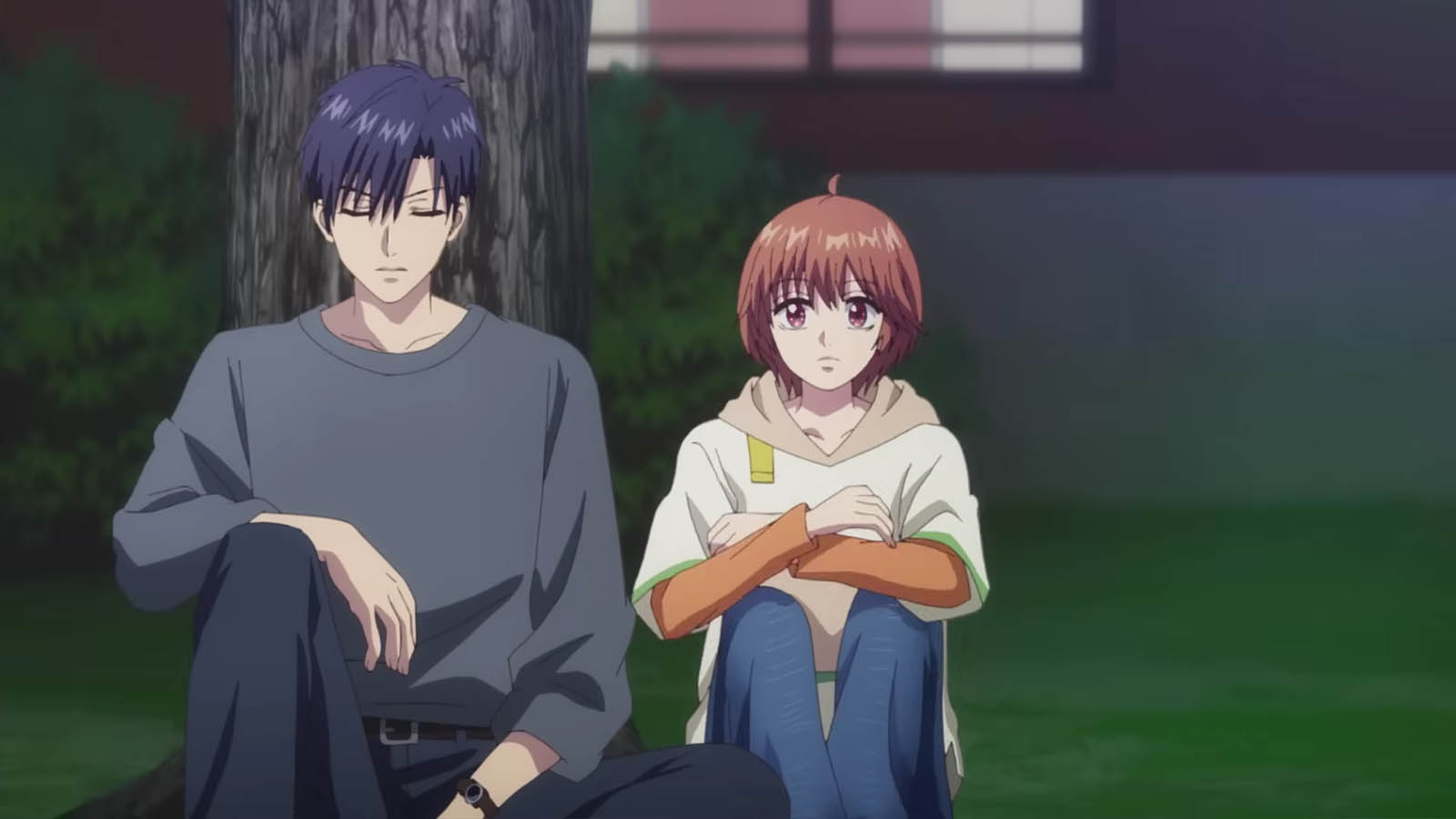
Hana Kimi anime vs. live-action — if you’ve seen both versions of this beloved shoujo story, you already know they’re not quite the same.
Based on Hisaya Nakajo’s manga Hanazakari no Kimitachi e, both adaptations follow the story of Mizuki Ashiya. She is a Japanese-American girl who disguises herself as a boy to enroll in an all-male high school to get close to her idol, high jumper Izumi Sano, and inspire him to return to the sport.
The original manga was serialized from September 1996 to August 2004, running for 23 volumes in the shoujo manga magazine, Hana to Yume.
Over the years, the story has inspired four Hana Kimi live-action adaptations: a 2006 Taiwanese drama, two Japanese dramas (the original 2007 Ikemen Paradise and a 2011 remake with a new cast and alternate storyline), and a 2012 South Korean drama titled To the Beautiful You.

The manga’s first anime series premiered in 2026, nearly two decades after the Hana Kimi live-action boom, with a second season already announced.
In this Hana Kimi anime vs. live-action breakdown, we’ll be taking a closer look specifically at the Japanese 2007 live-action adaptation and the animated series by Studio Signal.MD to explore three of the most notable differences between the two.
| NUMBER 3 IS SOUL-STIRRING Ranking the 5 most iconic Hana Kimi relationships in the anime |
Hana Kimi anime vs. live-action: 3 key differences you missed
Why did Sano quit high jump? The reason depends on which version you watch
One of the most significant differences in the Hana Kimi anime vs. live-action is the reason behind Sano’s departure from high jump.
In the 2007 Japanese Hana Kimi live-action drama, Sano suffered a torn ligament after saving Mizuki from danger in America, an injury severe enough to end his athletic career. Feeling responsible, Mizuki travels to Japan to encourage him to return to the sport.

The anime takes a far more gradual approach. At first, Sano claims he is simply “tired” of jumping, then denies that a past injury is the issue.
In a later episode, Sano finally admits that during the District Qualifiers, he hesitated at a critical moment during an accident he believes he could have avoided. He blames this split-second lapse on his own mental weakness, realizing that it’s a confidence issue rather than any physical limitation that caused him to quit.
Unlike the live-action, Mizuki had no prior knowledge that Sano was quitting the sport in the anime. She simply followed him to Osaka High as a devoted fan.
Two Hana Kimi anime characters didn’t make it to the live-action cut
Another difference in the Hana Kimi anime vs. live-action is the absence of side characters Wataru Nihonbashi and Julia Maxwell, both of whom play small but memorable roles in the anime.

Wataru Nihonbashi is one of the anime’s key comic relief, rarely seen without his camera. His presence stirs up a ruckus among students of Osaka High.
Julia Maxwell serves as Mizuki’s loyal best friend back in America, offering support through their correspondence while Mizuki explores life undercover at the all-boys academy.
When do they find out Mizuki is a girl? The big reveal happens differently in Hana Kimi anime vs. live-action
Perhaps one of the most telling differences in the Hana Kimi anime vs. live-action is how and when Sano discovers that Mizuki is a girl.
In the anime, the secret doesn’t last long at all. Sano becomes the first person to discover Mizuki’s true identity in episode 1 when Mizuki is injured during a friendly soccer match with Shuichi Nakatsu.

As Sano carries her to the infirmary, he accidentally touches her chest and immediately realizes she is a girl.
In the live-action, Sano does not find out until much later in the series. The truth comes out when Mizuki’s brother arrives at the school to bring her back to the United States.
Sano overhears their argument and realizes not only that Mizuki is a girl, but also how she’s connected to his injury in America.
Both the anime and the live-action bring something valuable to the Hana Kimi franchise, just in very different ways.
The 2007 Japanese Hana Kimi live-action drama is wonderfully camp and exaggerated in the best possible way, with a cast that throws themselves fully into the material and brings the story to life with infectious energy.

The anime, by contrast, stays closer to the manga’s lighter, more straightforward storytelling style.
When we really think about the Hana Kimi anime vs. live-action, which adaptation works better depends on what you are looking for as a viewer. If you want an adaptation that mirrors the manga’s tone and pacing, the Hana Kimi anime is likely to feel more satisfying.
On the other hand, if you want the kind of drama that keeps you on the edge of your seat, the live-action does that really well. Ultimately, both versions offer something unique.
Hana Kimi has continued to find new audiences across different formats and decades, which is a testament to how timeless the story really is. Either way you watch it, you will find yourself rooting for Mizuki and Sano all over again.